What’s New in the PMBOK® Guide Eighth Edition?
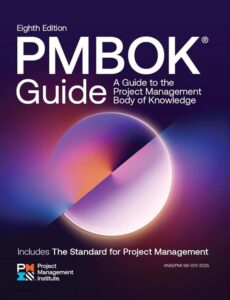
Many people think the PMBOK® Guide is one big book you’re supposed to read cover to cover. It’s not. It’s better to think of it as two pieces that work together.
The first is The Standard for Project Management, an official ANSI standard. The second is the PMBOK® Guide, which explains and expands on that standard. Neither is meant to be read like a novel. They’re reference guides—tools you use when you need them.
Key Dates & Details:
- Official Launch (Digital): November 13, 2025
- Physical Release: January 13, 2026
- PMP Exam Alignment: The new PMP exam launch (aligned with 8th ed PMBOK) is expected to take place in July of 2026.
The Standard and the Shift to Principles
The standard focuses on three core ideas:
- What a project is and the environment it operates in
- How organizations approach project work
- The principles that guide how projects should be managed
In the eighth edition, principles are the foundation. PMI introduced principles in the seventh edition and simplified them further in the eighth. The list was reduced from twelve to six principles, grouped into three clear categories.
Value-Driven Principles
The first group is value-driven.
Value is now built into the definition of a project. If a project finishes on time and on budget but doesn’t deliver real benefits, it hasn’t truly succeeded. Sustainability also lives here—and it’s more than just being “green.” It includes environmental, social, and economic impacts, all of which should influence project decisions.
Proactive Principles
The second group is proactive.
Holistic thinking pushes project managers to look at the whole system, not just individual tasks. Projects don’t exist in a vacuum, and decisions often have ripple effects. Quality is also a principle now, reinforcing that quality isn’t inspected at the end—it’s designed in from the beginning.
Ownership-Focused Principles
The third group centers on ownership.
Responsible leadership emphasizes accountability for outcomes, not just activities. Empowering culture supports that by creating trust, encouraging decision-making, and enabling teams to take real ownership of their work.
PMI reduced the number of principles to cut complexity. Concepts like being diligent, respectful, and caring didn’t disappear—they’re now embedded within broader principles such as responsible leadership.
From Process Groups to Focus Areas
One of the biggest mindset changes in the eighth edition is moving away from rigid process groups. PMI now uses Focus Areas instead.
The familiar phases—Initiating, Planning, Executing, Monitoring and Controlling, and Closing—still exist, but they’re no longer meant to be followed in a strict sequence. The guide fully supports traditional, Agile, and hybrid approaches. Everything is iterative and interconnected.
Performance Domains, Streamlined
What used to be called Knowledge Areas are now Performance Domains, simplified into seven:
- Governance
- Scope
- Schedule
- Finance
- Stakeholders
- Resources
- Risk
Important topics like communications and procurement are still there—they’re just embedded where they naturally belong.
Yes, Processes Are Back
Processes return in the eighth edition, complete with inputs, tools and techniques, and outputs. There are 40 processes in total.
These are best viewed as building blocks, not a checklist. The intent is tailoring—using what fits your project and organization rather than forcing everything into place.
How Projects Actually Flow
Projects still begin with Initiation, where the charter is created and stakeholders are identified. Early decisions are shaped by assumptions, environmental factors, and organizational process assets.
Planning covers scope, schedule, finance, stakeholders, resources, and risk—but planning is ongoing. It’s revisited as conditions change.
Execution is where work gets done. Governance supports decisions, quality is built into deliverables, teams are led and supported, stakeholders stay engaged, and risks are actively managed.
Monitoring and Controlling keeps the project aligned. Changes flow through governance, and feedback drives adjustments when needed.