
Microsoft Is Retiring Project Online: What It Means for Your Organization
Microsoft has officially announced that Project Online will be retired on September 30, 2026. For organizations relying on structured scheduling, portfolio oversight, and enterprise reporting, this is more than a routine product update — it is a strategic turning point that demands immediate attention.
At Global PM, we view this deadline as an opportunity to reassess whether your current platform truly supports long-term project controls maturity.

Many project managers are asking: What does this mean for our organization?
What Is the Microsoft Project Online Retirement?
The retirement applies specifically to Project Online — Microsoft's legacy SharePoint-based cloud solution for project and portfolio management. It is important to understand what is and is not changing:
- Being retired: Project Online (cloud, SharePoint-based)
- Continuing: Microsoft Project desktop versions and Project Server (on-premises)
- Microsoft's direction: Consolidating work management into the Microsoft Planner ecosystem
While Planner may serve lightweight collaboration and task tracking needs, organizations managing capital programs, engineering initiatives, or cost-driven portfolios often require deeper project controls than Planner-based tools can provide.
Why Is Microsoft Retiring Project Online?
Project Online was built on older SharePoint architecture that limits modernization and AI integration. Microsoft is prioritizing cloud-native platforms designed for broader Microsoft 365 collaboration — a strategic shift that simplifies their product portfolio but may not meet the needs of every enterprise.
For some teams, simplification is an advantage. For complex, multi-project environments, simplification can mean reduced control, reduced visibility, and reduced governance.
How Does This Affect Your Organization?
If your organization currently uses Project Online for any of the following, you are directly impacted by this retirement:
- Enterprise-grade project scheduling and resource management
- Capital program and portfolio visibility
- Cost tracking, risk management, and earned value analysis
- Executive-level reporting and dashboards
- Regulatory compliance and audit trails
With the September 30, 2026 deadline approaching, waiting to act is not a strategy — it is a risk. Enterprise migrations require time for data strategy, reporting alignment, governance updates, and user adoption planning.
Your Options: Stay in the Microsoft Ecosystem or Transition?
Organizations now face a critical decision: remain within Microsoft's evolving work management ecosystem, or transition to a purpose-built enterprise project management solution.
Option 1: Migrate to Microsoft Planner or Other M365 Tools
If your project management needs are primarily task-based, collaborative, and lightweight, Microsoft's Planner ecosystem may be sufficient. This path offers continuity within existing Microsoft 365 licenses and familiar interfaces.
Option 2: Transition to a Purpose-Built Enterprise PM Platform
For organizations where project controls, cost management, resource optimization, and multi-project visibility are non-negotiable, a transition to an enterprise-grade solution is the stronger long-term choice.
As an authorized reseller and implementation partner of Oracle Primavera P6 and Oracle Primavera Cloud, Global PM supports organizations that require:
- Enterprise-grade scheduling and planning
- Advanced resource and capacity management
- Multi-project and portfolio visibility
- Integrated cost and risk management
- Scalable cloud or on-premises deployment
Primavera solutions are purpose-built for industries where precision, governance, and performance tracking are critical — including construction, engineering, energy, utilities, and government.
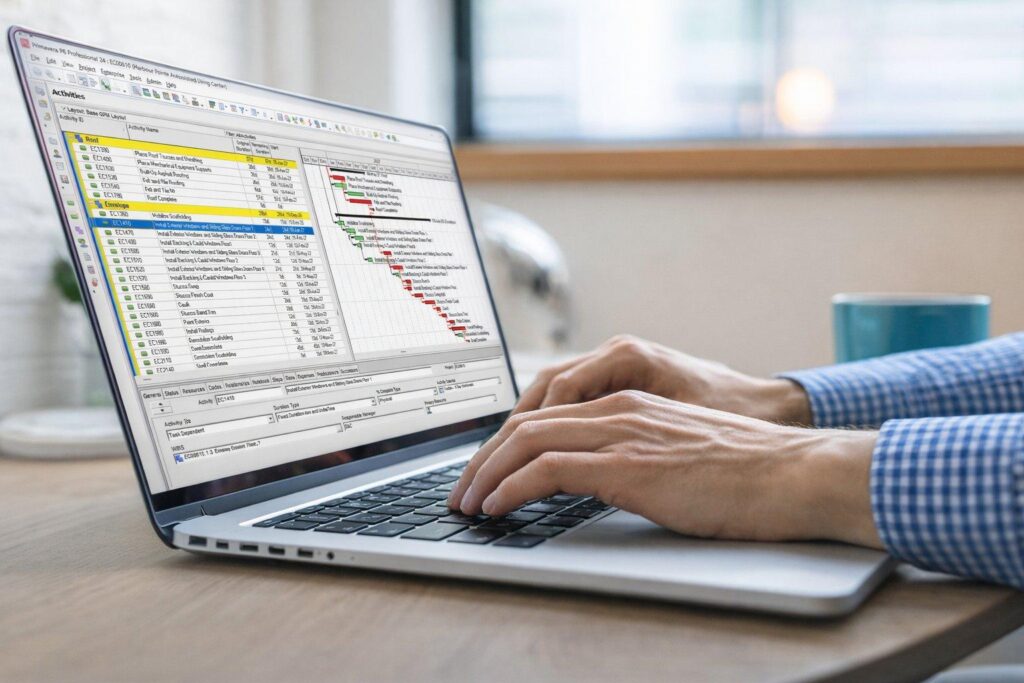
Oracle Primavera P6 delivers enterprise-grade scheduling, resource management, and portfolio visibility for complex programs.
Why Act Now? The Case for Early Migration Planning
Enterprise migrations are not plug-and-play transitions. A successful move from Project Online involves:
- Data migration strategy — mapping existing project data to the new platform
- Reporting alignment — rebuilding dashboards and KPI frameworks
- Governance updates — revising workflows, approvals, and access controls
- User adoption planning — training and change management for project teams
- Integration planning — connecting with ERP, finance, and scheduling systems
Starting this process in 2025 gives your organization the runway needed to migrate confidently — not reactively.
How Global PM Can Help
The retirement of Project Online is not simply a sunset. It is an opportunity to strengthen your project controls foundation with a platform built for the complexity your organization actually manages.
At Global PM, we help organizations evaluate, migrate, implement, and support Primavera solutions with confidence. Our services include:
- Current-state assessment and platform evaluation
- Migration planning and data strategy
- Oracle Primavera P6 and Primavera Cloud implementation
- Training, user adoption, and ongoing support
The key is acting early — not reacting late.
Frequently Asked Questions: Microsoft Project Online Retirement
When is Microsoft Project Online being retired?
Microsoft Project Online will be officially retired on September 30, 2026.
What is replacing Project Online?
Microsoft is directing users toward the Microsoft Planner ecosystem within Microsoft 365. Enterprise organizations requiring advanced project controls may benefit from transitioning to Oracle Primavera P6 or Oracle Primavera Cloud.
Does the Project Online retirement affect Project Server?
No. The retirement applies specifically to Project Online (the SharePoint-based cloud version). Microsoft Project Server (on-premises) and Project desktop versions are not affected.
What should organizations do before the Project Online retirement deadline?
Begin migration planning now. This includes platform evaluation, data migration strategy, reporting alignment, governance updates, and user adoption planning. Starting early avoids a reactive, compressed migration timeline.